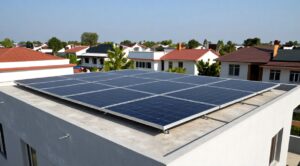
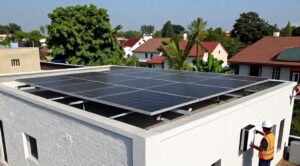

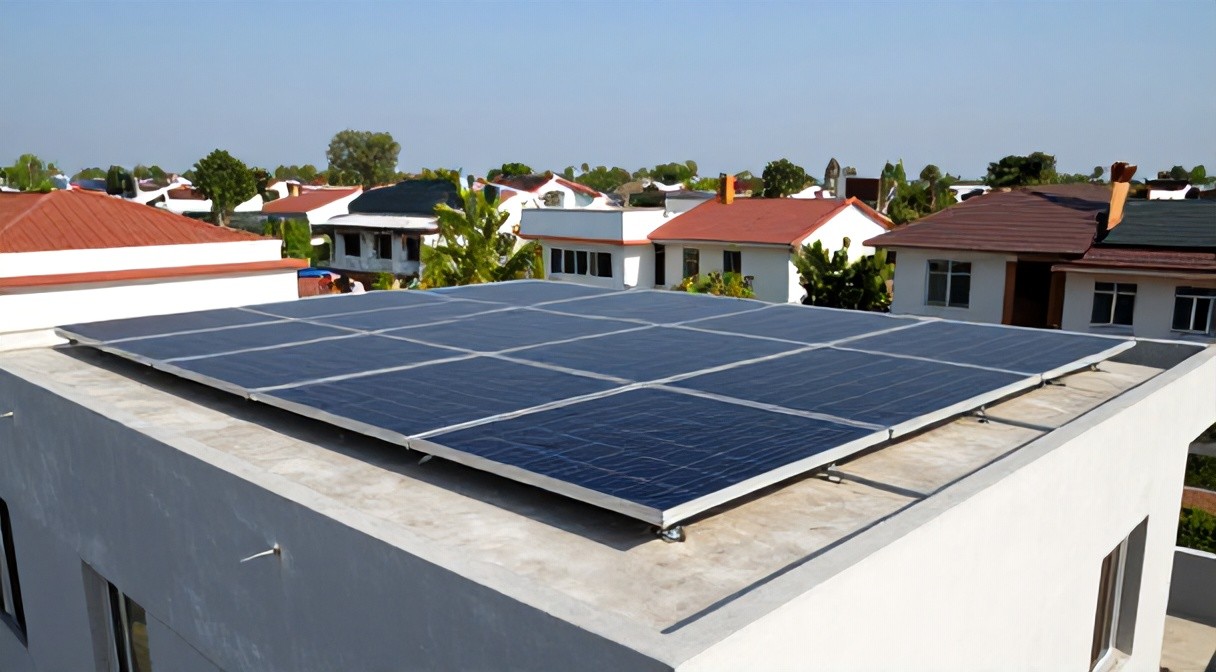
The PM Surya Ghar Muft Bijli Yojana stands as one of India’s most ambitious renewable energy initiatives, designed to empower domestic households to generate their own clean electricity while significantly lowering utility bills. Approved by the Union Cabinet in early 2024 with an outlay of ₹75,021 crore, the scheme aims to install rooftop solar panels across 1 crore (10 million) households nationwide. By integrating direct central financial assistance, concessional bank financing, and simplified net-metering processes, the central government has structured the program to deliver up to 300 units of free or net-zero cost electricity each month to participating families.
What is PM Surya Ghar: Muft Bijli Yojana?
Launched by Prime Minister Narendra Modi in February 2024, the PM Surya Ghar: Muft Bijli Yojana supersedes previous rooftop solar subsidy frameworks with an enhanced funding mechanism and a streamlined national digital portal. The primary goal is twofold: decentralize electricity generation across urban and rural settlements, and ease the financial burden of power consumption for middle-class and lower-income families.
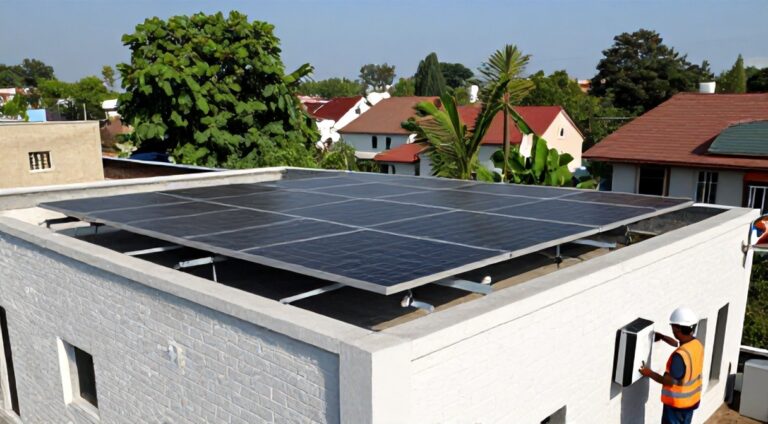
Under this initiative, residential property owners install grid-connected solar photovoltaic (PV) systems on their terraces or rooftops. Through a net-metering arrangement with the local electricity distribution company (DISCOM), households feed excess daytime solar generation back into the regional grid. At night or during high-load periods, power is drawn back from the grid. If a household generates enough power to match or exceed its monthly usage—typically up to 300 kilowatt-hours (units)—the net electricity bill drops to zero, aside from mandatory minimum fixed charges.
Subsidy Structure and Financial Benefits
The central government provides a fixed Direct Benefit Transfer (DBT) subsidy based on the capacity of the installed solar energy system. The financial assistance has been calibrated to offer the highest relative support to smaller household consumers who need it most.
Current Residential Subsidy Rates
- 1 kW System: Fixed central subsidy of ₹30,000. Recommended for households consuming between 0 and 150 units per month.
- 2 kW System: Fixed central subsidy of ₹60,000. Suitable for households with an average monthly consumption of 150 to 300 units.
- 3 kW System (and above): Maximum central subsidy capped at ₹78,000. Ideal for larger households consuming over 300 units per month.
For systems exceeding 3 kW capacity, the subsidy remains capped at ₹78,000 for individual residential houses. However, Group Housing Societies (GHS) and Residential Welfare Associations (RWA) can access financial assistance of ₹18,000 per kW for common facilities (such as lifts, water pumping systems, and corridor lighting) up to an aggregate capacity of 500 kW.
State-Specific Top-Up Subsidies
Several state governments in India provide an additional state-level top-up subsidy on top of the central financial support. For instance, states like Uttar Pradesh have historically offered supplementary grants to accelerate local adoption. Applicants should verify on their state DISCOM portal whether their regional government offers extra incentives alongside the national scheme.
Eligibility Criteria for Applicants
To qualify for the rooftop solar subsidy under this national scheme, an applicant must satisfy specific baseline conditions:
- Citizenship: The applicant must be a citizen of India.
- Property Ownership: The applicant must own a residential property with a legally recognized roof suitable for solar panel installation. The roof must be structurally sound and free from permanent shade cast by trees, hoardings, or adjacent buildings.
- Electricity Connection: The house must have an active, metered electricity connection supplied by the local DISCOM. The electricity connection and meter should be registered under the name of the applicant or a direct family member residing on the premises.
- One Subsidy Per Household: Central subsidy can only be claimed once per household. If the property has already availed of a central government rooftop solar subsidy under an older scheme, it is generally ineligible for a second grant for the same address.
- Grid-Connected System: The scheme applies exclusively to grid-tied systems that use net metering. Standalone off-grid battery systems without a grid tie-in are not covered under the central DBT subsidy framework.
Required Documents
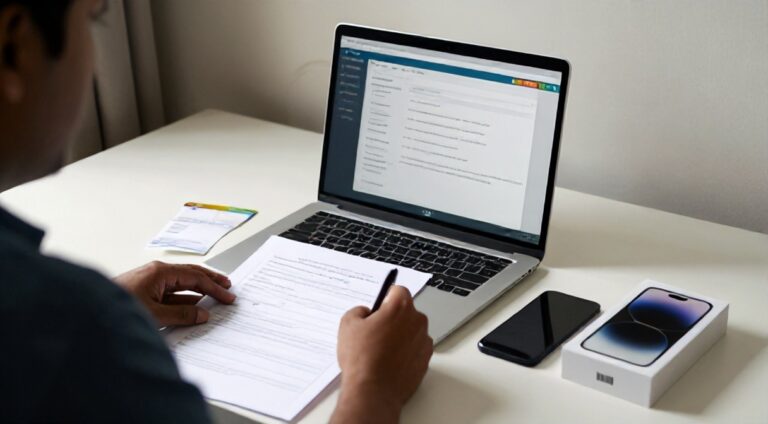
Before beginning the online application, applicants should keep scanned copies or digital records of the following documentation:
- Recent electricity bill (showing the consumer account number, sanctioned load, and service address).
- Aadhaar card of the electricity connection holder.
- Bank account details (cancelled cheque or first page of the bank passbook) showing the account number and IFSC code for the DBT transfer. The account must be linked to the applicant’s Aadhaar.
- Clear photograph of the rooftop space showing adequate unshaded area.
- Mobile number linked to the active Aadhaar card for OTP verifications.
Step-by-Step Guide: How to Apply Online
The entire application and disbursal pipeline is hosted centrally on the official government web portal. Prospective beneficiaries do not need to deal with middlemen or third-party agents.
Step 1: Registration on the National Portal
Visit the official portal at pmsuryaghar.gov.in. Click on the “Apply for Rooftop Solar” option. Select your state, union territory, and respective electricity distribution company (DISCOM). Enter your Consumer Account Number exactly as printed on your monthly electricity bill, then verify your identity with your mobile number and email address via OTP.
Step 2: Technical Feasibility Approval
Log in with your registered consumer credentials and submit the basic application form. You will be asked to detail your existing sanctioned load, desired rooftop solar capacity (e.g., 2 kW or 3 kW), and address. The application is automatically routed to your local DISCOM to check technical feasibility (transformer capacity and grid parameters). Once the DISCOM issues technical clearance, you will receive an online feasibility approval notice.
Step 3: Selecting a Registered Vendor and Installation
Following feasibility clearance, you must choose an approved, empanelled solar vendor listed on the national portal. Working with a registered vendor ensures that the solar modules (panels) and inverters adhere to the Bureau of Indian Standards (BIS) and Domestic Content Requirement (DCR) criteria, both of which are mandatory for subsidy disbursal. Sign a contract with your chosen vendor and proceed with mounting the panels, wiring, and inverters.
Step 4: Net-Meter Installation and Commissioning
After installation, the vendor submits the work completion report alongside technical specifications to the portal. The local DISCOM conducts a site inspection to confirm proper installation, safety isolators, and grid synchronization. The DISCOM then replaces the conventional energy meter with a bi-directional net meter. Following successful inspection, the DISCOM generates an official commissioning certificate on the portal.
Step 5: Subsidy Claim via DBT
Once the commissioning certificate is visible on your portal dashboard, submit your bank account details along with a cancelled cheque copy. The Ministry of New and Renewable Energy (MNRE) verifies the documents and releases the central subsidy directly into your bank account via the Public Financial Management System (PFMS) within 30 days of validation.
Low-Interest Solar Financing and Bank Loans
To reduce the upfront capital expenditure for citizens who cannot pay the entire cost at once, public sector banks and leading financial institutions offer collateral-free rooftop solar loans for systems up to 3 kW. The interest rate on these designated green loans is capped at favorable terms (generally around 0.5% over the prevailing RBI repo rate, translating to roughly 7% per annum).
Because the central subsidy of up to ₹78,000 can be factored into the loan settlement or credited against the principal, the effective monthly EMI often approximates the monthly electricity savings generated by the panels, making the transition cash-flow neutral for typical middle-class households.
Practical Limitations and Considerations
While the PM Surya Ghar Muft Bijli Yojana offers substantial long-term savings, prospective applicants should be aware of several operational realities:
- Roof Rights: In multi-story apartment complexes, individual flat owners may encounter difficulties obtaining exclusive rooftop rights. Community approval and dedicated space are necessary before an individual setup can be approved.
- Grid Outages: Standard grid-tied systems do not function during localized grid power cuts for safety reasons (anti-islanding protection prevents backfeeding electricity into lines that utility workers might be servicing). If uninterrupted backup power is required, users must install specialized hybrid inverters and battery storage, the cost of which is not covered by the subsidy.
- Upfront Capital: While loans exist, consumers must generally arrange the gross system cost initially or service loan EMIs until the DBT subsidy arrives in their bank account.
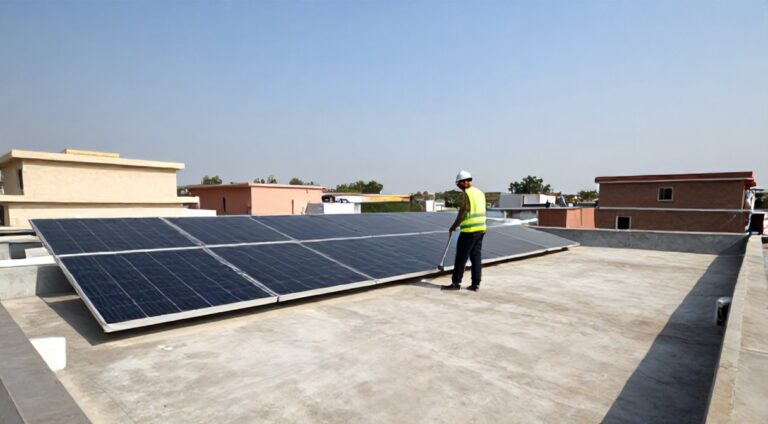
- Routine Maintenance: Solar panels lose efficiency if dust, bird droppings, or pollution collect on the glass surfaces. Regular cleaning every 10 to 15 days is required to maintain the estimated 300 units of monthly generation.
Frequently Asked Questions (FAQs)
1. Can tenants living in rented homes apply for the subsidy?
No. The scheme requires ownership of the residential premises and an active electricity meter registered to the owner or a recognized household member. Tenants cannot claim subsidies for properties they do not own unless the property owner applies directly.
2. How long does it take for the subsidy to reach the bank account?
Under official operational guidelines, once the DISCOM inspects the system, issues the net meter, and uploads the commissioning certificate, the DBT subsidy is credited within approximately 30 working days following bank detail verification.
3. What is the expected lifespan of a rooftop solar plant?
Modern residential solar PV modules typically carry a performance warranty of 25 years. Most manufacturers guarantee that panels will produce at least 80% to 85% of their rated capacity after 25 years of operation. Inverters generally require replacement or maintenance around the 10 to 12-year mark.
4. Can I install solar panels myself or use any local electrician?
No. To be eligible for the DBT subsidy under the PM Surya Ghar Muft Bijli Yojana, installation must be carried out exclusively by an empanelled vendor registered on the national portal. Systems installed by unauthorized vendors or using non-DCR compliant panels are rejected during DISCOM verification.
5. Where should I check for official updates and application tracking?
All official applications, tracking tools, vendor directories, and grievance redressals are managed through the central Ministry of New and Renewable Energy portal at pmsuryaghar.gov.in.